◦ FIGURE · DEPENDENCY MAP

Dependency map
twelve dimensions in three pillars

The twelve dimensions of the maturity model are not a checklist — they form a directed graph. Strategic posture flows into AI-to-Value and decision rights. Agentic autonomy requires decision-rights maturity, which gates reversibility, which gates incident response, which surfaces observability evidence back to risk management. Data quality gates every decision-requiring dimension. Workforce capability gates the HITL meaningfulness that makes decision rights real. This map shows the load-bearing edges: which dimensions constrain which, and which gaps will cascade.

v1.0 Tier A simplification. The full 35-sub-dimension dependency spine lands in the Tier B PDF version (v1.0 and beyond). This diagram shows the dimension-level dependencies that hold across all three pillars.
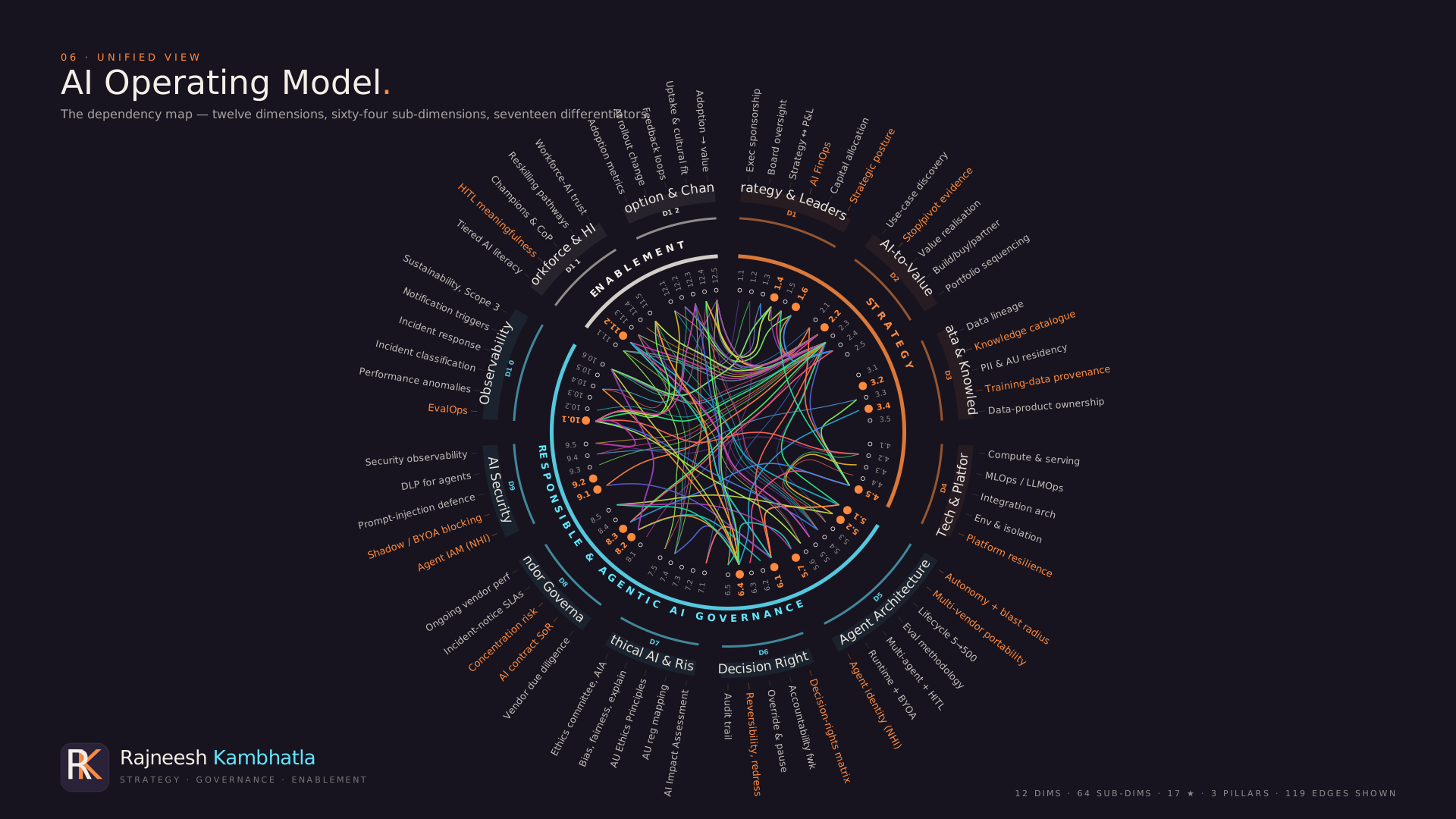
AI Operating Model dependency map: twelve dimensions across three pillars (Strategy, Responsible & Agentic AI Governance, Enablement) with sub-dimension spokes and load-bearing cross-dimension handshakes.
Pillar 1 Strategy
D1 Strategy & Leadership
  • 1.1Exec sponsorship
  • 1.2Board oversight
  • 1.3Strategy ↔ P&L
  • 1.4AI FinOps
  • 1.5Capital allocation
  • 1.6Strategic posture ★
D2 AI-to-Value
  • 2.1Use-case discovery
  • 2.2Stop/pivot evidence
  • 2.3Value realisation
  • 2.4Build/buy/partner
  • 2.5Portfolio sequencing
D3 Data & Knowledge
  • 3.1Data lineage
  • 3.2Data-product ownership
  • 3.3PII & AU residency
  • 3.4Training-data provenance
  • 3.5Knowledge catalogue
D4 Tech & Platform
  • 4.1Compute & serving
  • 4.2Platform resilience
  • 4.3Integration arch
  • 4.4MLOps / LLMOps
  • 4.5EvalOps
Pillar 2 Responsible & Agentic AI Governance
D5 Agent Architecture
  • 5.1Agent identity (NHI)
  • 5.2Lifecycle 5→500
  • 5.3Eval methodology
  • 5.4Multi-agent + HITL
  • 5.5Runtime + BYOA
  • 5.6Multi-vendor portability
  • 5.7Autonomy + blast radius
D6 Decision Rights
  • 6.1Decision-rights matrix ★
  • 6.2Override & pause
  • 6.3Accountability fwk
  • 6.4Reversibility, redress ★
  • 6.5Audit trail
D7 Ethical AI & Risk
  • 7.1Ethics committee, AIA
  • 7.2Bias, fairness, explain
  • 7.3AU Ethics Principles
  • 7.4AU reg mapping
  • 7.5AI Impact Assessment
D8 Vendor Governance
  • 8.1Vendor due diligence
  • 8.2AI contract SoR
  • 8.3Ongoing vendor perf
  • 8.4Incident-notice SLAs
  • 8.5Concentration risk
D9 AI Security
  • 9.1DLP for agents
  • 9.2Prompt-injection defence
  • 9.3Security observability
  • 9.4Shadow / BYOA blocking
  • 9.5Agent IAM (NHI)
D10 Observability
  • 10.1Incident classification
  • 10.2Incident response
  • 10.3Performance anomalies
  • 10.4Data lineage runtime
  • 10.5Notification triggers ★
Pillar 3 Enablement
D11 Workforce & HITL
  • 11.1Tiered AI literacy
  • 11.2HITL meaningfulness
  • 11.3Reskilling pathways
  • 11.4Champions & CoP
  • 11.5Workforce-AI trust
D12 Adoption & Change
  • 12.1Adoption metrics
  • 12.2AI rollout change
  • 12.3Feedback loops
  • 12.4Uptake & cultural fit
  • 12.5Adoption → value

★ Load-bearing gates — the four sub-dimensions named in the W1 meta-essay: strategic posture, decision rights, reversibility, notification triggers.

Three pillars
Strategy
Executive sponsorship, posture, value, resilience
Responsible & Agentic AI Governance
Decision rights, agentic autonomy, risk, observability, compliance
Enablement
Workforce capability, adoption, change management
Home Essays Framework About